Great Emoji Regular: A Typeface That Feels Like a High-Five
There’s a certain kind of design project that demands more than just clean lines and perfect kerning. It needs a voice. It needs a little bit of noise, a dash of spontaneity, and a whole lot of heart. You know the ones—the social media campaign that needs to pop off the screen, the children’s book that should feel like it was scribbled with joy, the product packaging that wants to jump into a customer’s hands. For these moments, you don’t just need a font; you need a feeling. That’s exactly where the Great Emoji typeface family enters the conversation, and its Regular style is the bold, friendly handshake that starts it all.
More Than Just Letters: The Anatomy of a Cheerful Font
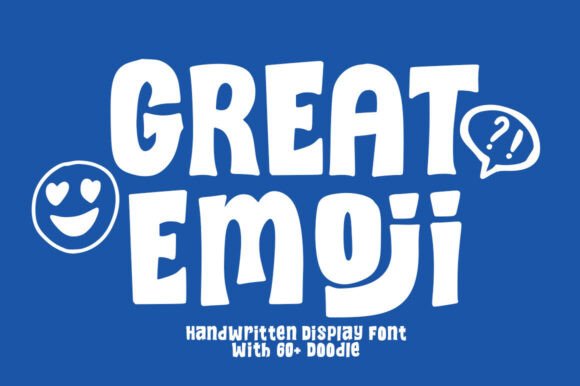
At its core, Great Emoji Regular is a handwritten display font with a personality as big as its letterforms. Think of it as the typographic equivalent of a confident, friendly doodle. The characters are bold and rounded, with that imperfect, hand-drawn quality that instantly injects warmth and approachability into any layout. It’s not trying to be a refined script or a serious serif font. Instead, it proudly embraces a casual, playful aesthetic that feels authentic and engaging.
This isn’t just about looking fun, though. The visual weight and style of Great Emoji Regular make it a surprisingly practical tool. In a world of minimalist sans serif fonts and elegant scripts, this display font cuts through the visual noise. It commands attention on a crowded social feed, makes a headline on a poster impossible to ignore, and gives a brand’s voice an instant dose of charisma. It’s the font you choose when you want your message to feel like it’s coming from a real, enthusiastic person, not a corporate machine.
Putting the Font to Work: Real-World Applications
Theory is nice, but where does a font like this actually shine? The better question is: where doesn’t it? Its versatility as a creative font is its greatest strength, allowing it to adapt to a wide range of projects where a lighthearted, human touch is needed.
For brand identity, Great Emoji Regular can be a game-changer for certain businesses. Imagine a local bakery, a children’s activity center, a trendy coffee shop, or a startup with a playful brand voice. Using this font for their logo or primary headline creates an immediate emotional connection—it says, “We’re fun, we’re approachable, and we don’t take ourselves too seriously.” It sets a mood before a customer even reads a word of copy.
When it comes to packaging design, especially for products targeting families, kids, or a younger, more casual demographic, this font is a natural fit. It can make a snack package feel more exciting, a toy box more inviting, or a craft kit more inspiring. The same principle applies to merchandise. Think about bold, expressive text on a t-shirt, a tote bag, or a sticker—Great Emoji Regular has the visual punch to make wearable graphics stand out.
For digital creators, the applications are endless. It’s perfect for eye-catching social media graphics, especially for Instagram Stories, YouTube thumbnails, or TikTok overlays where grabbing attention in a split second is everything. It can also bring life to blog headers, newsletter graphics, and digital product covers. In web design, while it’s not meant for body copy, it’s fantastic for hero section headlines, call-to-action buttons, or section titles on a site that wants to project a vibrant, energetic vibe.
Let’s not forget print. Event posters, party invitations, school project headers, and editorial design for youth-oriented magazines all benefit from its expressive character. It’s a font that understands context and amplifies the intended emotion of a piece.
Practical Tips for a Harmonious Design
Using a strong personality font effectively requires a bit of strategy. Here’s how to make the most of the Great Emoji family without overwhelming your project.
Choose Your Style with Purpose. The family includes three distinct tools. Great Emoji Regular is your workhorse for bold, impactful headlines. The Italic version adds a sense of motion and energy, perfect for quotes, call-outs, or adding a dynamic feel to a static design. Then there’s the Doodle style—a bonus set of over 60 hand-drawn emoji illustrations. These are not just dingbats; they’re design assets. Use them as bullet points, section dividers, or standalone graphics to reinforce the playful theme throughout your layout.
Master the Art of Font Pairing. This is crucial. A font with this much character needs a calm, stable partner to create visual balance. Pair Great Emoji Regular with a clean, neutral sans serif font like Montserrat or Lato for body text. This contrast ensures readability while letting the display font do its job of capturing attention. Avoid pairing it with other highly decorative or script fonts, as that will create visual chaos.
Prioritize Readability. While it’s designed for impact, always consider your medium and audience. At very small sizes or in long paragraphs, its handwritten nature can become challenging to read. It’s best used for headlines, subheads, short phrases, and display text. For longer body copy, always switch to a more traditional, legible typeface.
Consider the Commercial License. If you’re using this for a client project, a business logo, or any merchandise you plan to sell, ensure you have the correct commercial license. This is a standard and important step with any premium font to protect both you and your client. The peace of mind is worth it.
Finding the Right Voice for Your Project
Ultimately, typography is about communication. The typeface you select is the first tone of voice your audience hears. Great Emoji Regular isn’t the right choice for a law firm’s annual report or a luxury watch brand’s minimalist ad. But for a huge range of projects that thrive on energy, authenticity, and human connection, it’s an incredibly powerful design asset.
It’s a font that understands the modern landscape of visual communication, where personality often trumps perfection. By incorporating it thoughtfully—pairing it wisely, using its styles intentionally, and respecting its strengths—you can create designs that don’t just look good but feel genuinely engaging. It’s a little boost of typographic joy, ready to make your next creative project smile.