Winter: The Curly Font That Brings Cozy Charm to Any Project
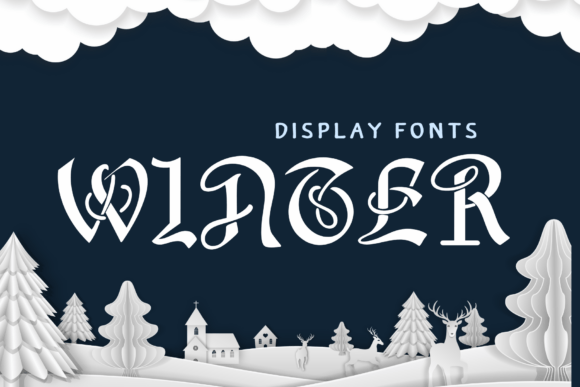
There’s a certain magic to lettering that feels handwritten, especially when it carries a sense of warmth and personality. Winter, a curly display font, does exactly that. Its fun, swirly letters aren’t just decorative—they evoke a feeling, a season, and an emotion. Think of the gentle curves of a frosted windowpane or the playful loops of a holiday ribbon. This typeface isn’t trying to be serious or corporate; it’s here to inject joy, comfort, and a touch of whimsy into your work. For anyone designing something meant to feel personal, festive, or inviting, it’s a tool worth understanding.
More Than Just Pretty Letters: The Visual Appeal
At its core, Winter is a display font, meaning it’s crafted for impact in headlines, logos, and short bursts of text rather than for long paragraphs. Its visual personality is defined by its curly, swirly terminals and consistent, friendly weight. Unlike a stark serif font or a clean sans serif font, Winter’s script font characteristics give it a human, handwritten font quality. Each letter feels like it was drawn with a soft-tipped pen, resulting in a rhythm that’s lively yet harmonious. The strokes are balanced to avoid looking chaotic, ensuring that while it’s playful, it remains legible at the sizes it’s designed for. This makes it a premium font choice for projects where the typography itself needs to communicate a specific mood—in this case, coziness, celebration, and creativity.
Where Winter Truly Shines: Practical Applications
The real test of any creative font is how it performs in the wild. Winter’s aesthetic lends itself naturally to a variety of design assets and projects where a touch of warmth is needed.
- Branding & Logo Design: For a bakery, a boutique candle shop, a children’s brand, or a cozy café, Winter can become a cornerstone of the brand identity. It instantly communicates a friendly, approachable, and artisanal feel. Use it for the main wordmark or as a complementary accent font.
- Packaging Design: Imagine this font on a box of gourmet hot chocolate, a jar of homemade jam, or a holiday gift tag. It elevates packaging design from merely informational to an experience, telling customers a story of care and quality before they even open the product.
- Digital & Print Invitations: Whether for a winter wedding, a holiday party, or a cozy book club meeting, setting the event details in Winter immediately sets a festive and intimate tone. Its readability in short lines makes it perfect for invitations and cards.
- Social Media Graphics & Web Design: In the fast-scrolling world of social media graphics, a distinctive font stops thumbs. Use Winter for quote graphics, sale announcements, or story headings to add personality. On a website, it can be used sparingly for hero section titles or special blog post headers to break the monotony of standard web fonts.
- Merchandise & Posters: From tote bags to t-shirts and from event posters to gallery art prints, this font turns text into a visual asset. It’s particularly effective for merchandise targeting seasonal markets or niche communities that value handmade aesthetics.
- Editorial & Marketing Assets: In a magazine layout or a brochure, a pull quote set in Winter can draw the eye and add a moment of delight. For marketing assets like email headers or printable worksheets, it helps create a cohesive and engaging visual language.
Strategic Typography: Making the Font Work for You
Choosing a font like Winter is the first step. Using it effectively requires a bit of strategy to ensure it enhances rather than hinders your communication. The goal is to leverage its personality to improve visual consistency, brand recognition, and audience engagement.
First, consider readability. As a display font, Winter is not meant for body copy. Pair it with a highly legible serif or sans serif font for paragraphs, instructions, or detailed information. This contrast creates a clear visual hierarchy: Winter captures attention, and the companion font delivers the message clearly. Test your font pairing at different sizes to ensure the curly details don’t become muddy when small.
Second, match the typography to your project’s core goal. Is it to sell? To inform? To celebrate? Winter’s personality is best suited for projects where emotion and aesthetics are primary drivers. For a law firm’s annual report, it would be out of place. For a children’s charity’s holiday fundraiser, it could be perfect. Always ask: does this font’s voice align with the message I need to send?
Third, explore the full family. A quality premium font often comes with multiple styles—like italic, bold, or alternate characters. These variations give you flexibility. Maybe you use the standard Winter for headlines and a more subdued italic version for subheadings or accents, maintaining the brand feel without overwhelming the design.
Finally, always check the licensing. If you’re using this for client work, merchandise for sale, or widespread digital distribution, ensure you have the correct commercial font license. This protects you legally and respects the work of the type designer.
A Tool for Connection, Not Just Decoration
In a landscape saturated with minimalism and geometric precision, a font like Winter offers a valuable counterpoint. It reminds us that design can be joyful, tactile, and human. It’s a typeface that doesn’t just sit on the page; it communicates a feeling. For the small business owner crafting their first brand identity, the designer seeking to break a creative block, or the blogger wanting to make their site feel more personal, it provides a straightforward way to add a layer of emotional resonance. Used thoughtfully, it becomes more than a collection of swirly letters—it becomes a bridge between your project and the person experiencing it, making the ordinary feel a little more magical.