The Vampire Font: When Your Design Needs a Bite of Horror
There's a specific kind of tension that happens in design when you need something to look genuinely unsettling. Not campy, not cartoonish, but authentically dark. If you've ever scrolled through a library of display fonts looking for that perfect typeface for a Halloween event, a horror brand, or a thriller book cover, you know the struggle. Most options lean too hard into cliché. Then you find something like the Vampire font, and suddenly the project clicks. This isn't just a novelty typeface; it's a tool built for a very specific mood, and when used correctly, it delivers a visceral punch that standard serif or sans serif options simply cannot achieve.
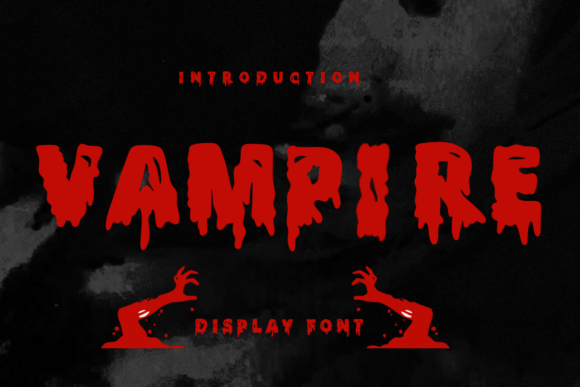
As a creative font, Vampire is defined by its high-impact visual personality. It features bold, heavy strokes that mimic the weight of gothic architecture, but with a modern, aggressive edge. The defining characteristic is the "blood-dripping" effect on the letterforms. In typography, texture is often subtle, but here it is the main event. The drips add a sense of urgency, decay, and the macabre. It reads as a premium font because the details are intentional—it doesn't look like a filter was applied in Photoshop; it looks like it was drawn with that intent from the start. This makes it an incredibly effective asset for brand identity projects that need to evoke a sense of the undead, the supernatural, or the terrifying.
Crafting Atmosphere: From Logos to Haunted Houses
The primary value of a display font like Vampire lies in its ability to set a scene instantly. When you are working on logo design for a haunted attraction, a metal band, or a horror-themed escape room, the typography does 80% of the heavy lifting. You don't need a paragraph of text to explain that an event is scary; the jagged, bleeding edges of the Vampire font communicate that message in a millisecond.
Consider the applications in print materials. If you are designing flyers for a local haunted house or a Halloween festival, readability is important, but "mood" is the priority. You want people to stop and stare. Vampire works best in large formats—headers, posters, and titles. Imagine a poster for a horror movie marathon. Using a clean sans serif font for the showtimes and Vampire for the main title creates a hierarchy that screams "fear." It’s also an excellent choice for packaging design, particularly in the novelty candy or costume industry. A bag of "Vampire Blood" energy drink or a box of fake fangs needs a label that matches the product's intensity.
For merchandise, the font translates beautifully onto dark backgrounds. Think black t-shirts with white or blood-red typography. Because the font has a built-in texture, it often eliminates the need for complex illustrations or distressing overlays. It stands on its own as a piece of art, making it a favorite for crafters and hobbyists selling on platforms like Etsy.
Digital Screams: Web Design and Social Media Strategy
In the realm of web design and social media graphics, stopping the scroll is the goal. We live in a visual economy where users process images faster than text. A creative font like Vampire can serve as a visual anchor for your content. However, the rules for digital application are slightly different than print.
For websites, you should rarely use a textured, dripping font for body copy. It becomes illegible and tires on the eyes. Instead, use it for "hero" text—those massive headers at the top of a landing page. If you are launching a horror podcast or a true-crime blog, using Vampire for your H1 headers establishes your niche immediately. Pair it with a clean, legible serif font or sans serif font for the actual blog content. This contrast creates visual consistency without sacrificing readability.
On platforms like Instagram or TikTok, where visual noise is high, Vampire is a powerhouse. It is perfect for social media graphics promoting:
- Spooky season sales and promotions.
- Horror movie reviews or book recommendations.
- Halloween party invitations.
- Countdown timers to specific events.
Strategic Typography: Pairing and Professional Application
Using a highly stylized font like Vampire requires a bit of strategy to avoid looking amateurish. This is where the concept of font pairing becomes critical. A common mistake in modern typography is trying to match a loud font with another loud font. If you pair Vampire with a complex script font or a scratchy handwritten font, the design becomes chaotic and unreadable.
The best approach is contrast. Because Vampire has so much "noise" and texture, it needs a quiet partner. A geometric sans serif font (like a clean Futura or Montserrat style) works exceptionally well. The clean lines of the sans serif will ground the design, allowing the Vampire headers to shine without overwhelming the viewer. This balance is essential for brand recognition. You want your audience to recognize the vibe, but you also want them to be able to read the details of your event or offer.
Another practical consideration is the scale. This typeface is designed to be a premium font for large-scale display. When used at 8pt or 10pt, the dripping details will merge into a muddy blob. Always use it at sizes where the character details are visible. If you are working on editorial design, such as a magazine layout for a horror genre, use Vampire for pull quotes or section dividers, but stick to a standard typeface for the columns of text.
Licensing and Final Thoughts for Creators
Before you integrate this font into your next big project, it’s vital to understand the scope of commercial font licensing. Most premium fonts come with specific terms. If you are a small business owner using this for a logo, or a marketer using it for a client's marketing assets, you typically need a license that covers commercial use. Always review the included font styles—does the family come with bold or italic variations? In the case of Vampire, the "regular" style is usually the star, but knowing your full toolkit helps in planning your design system.
Ultimately, Vampire is more than just a novelty. It is a specialized tool in a designer's arsenal. It solves the specific problem of needing to convey "horror" or "Halloween" without relying on clip art. Whether you are a blogger looking to spice up a post about the best slasher films, or an entrepreneur launching a seasonal product line, this typeface offers a high-impact solution. It brings the perfect bite of terror to your brand identity, ensuring that your designs don't just whisper—they scream.